|
Thornton Utz was born
Nov. 15, 1914, in Memphis, Tenn., where he spent his young years
doodling in textbooks. After discovering his artistic talent, he
struggled to save enough money to attend art school in Chicago. With
the country in a depression, Utz could afford only one year at the
American Academy of the Arts, and though he studied there for only a
short time, he learned the secret to being a great artist: drawing
continually.
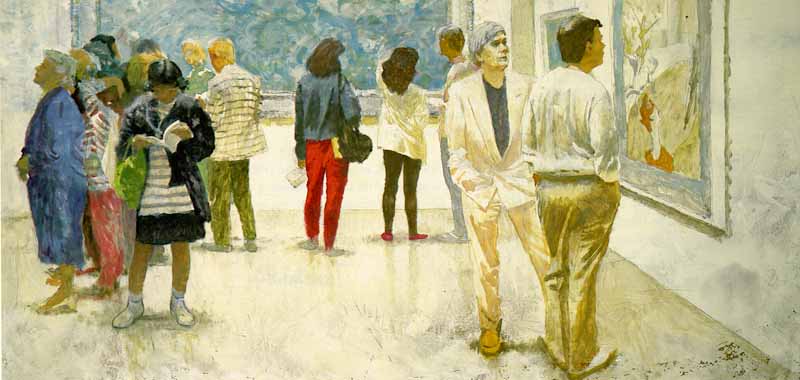
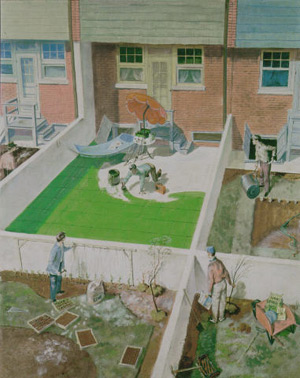
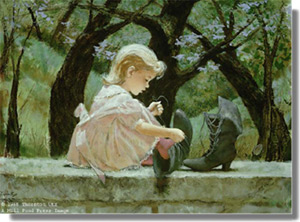
And draw Utz did, as well as paint, illustrate and design. Initial
recognition of his work came for his illustrations. During the 1940s
and '50s, Utz provided advertising illustrations for clients such as
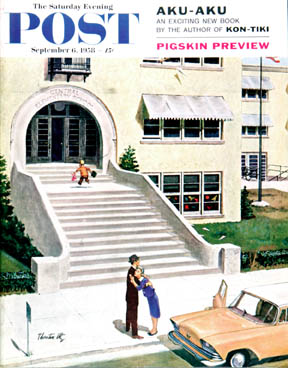
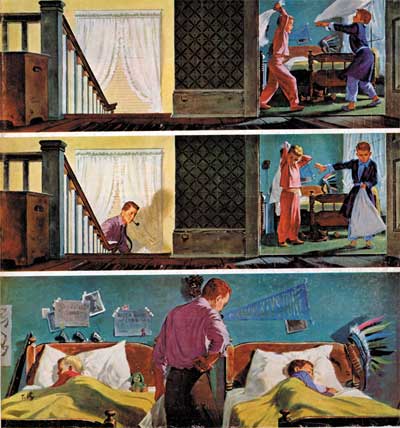
Coca-Cola, General Electric, and Ford Motor Co. His work also graced
more than 50 covers of the 'Saturday Evening Post.' Eventually, Utz dedicated himself full time to working in the fine arts, which for him included portraituture and sculpture..
International fame
came with portraits of Princess Grace of Monaco and President Jimmy
Carter, as well as the Carter family. During his achievements, Utz never fancied himself a talented artist. 'He was so humble, thought so little of himself,' said his daughter Dawn Hadley. 'He never thought of himiself as a great artist. That was just his work and his trade. That's what he did to provide for his family.'
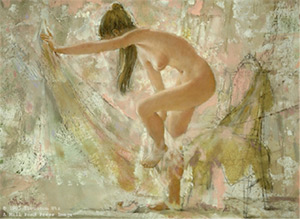
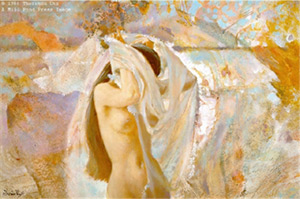
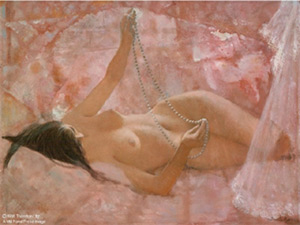
During his lifetime, Utz became a leaving contemporary painter of nudes and portraits, preserving this tradition with spontaneity and joy. In addition to classic figure painting, he attacked the areas of portraiture, sculpture, stained glass and architecture as well. Utz saw the nude, however, as an endless challenge. His numerous paints of nudes are reminiscent of Degas' coloration and Renoir's brushwork, and are proff of his artistic triumphs.
"Drawing and printing the nede is a classic, endless challenge," Utz said. "For subject matter I prefer a model to perform an action or a chore she would naturally and normally do alone, such as bathing, fixing her nails and so forth. In my paintings I want express a respect for the particular young woman portrayed and for women in general." |
|